

Expert EV Charging Infrastructure Design
From feasibility to construction — EV, eHGV and Megawatt Charging System design, backed by rigorous electrical engineering, for commercial, fleet, industrial and public-sector projects across the UK.
A JBSE Consulting Engineers company
Complete EV Charging Design Support
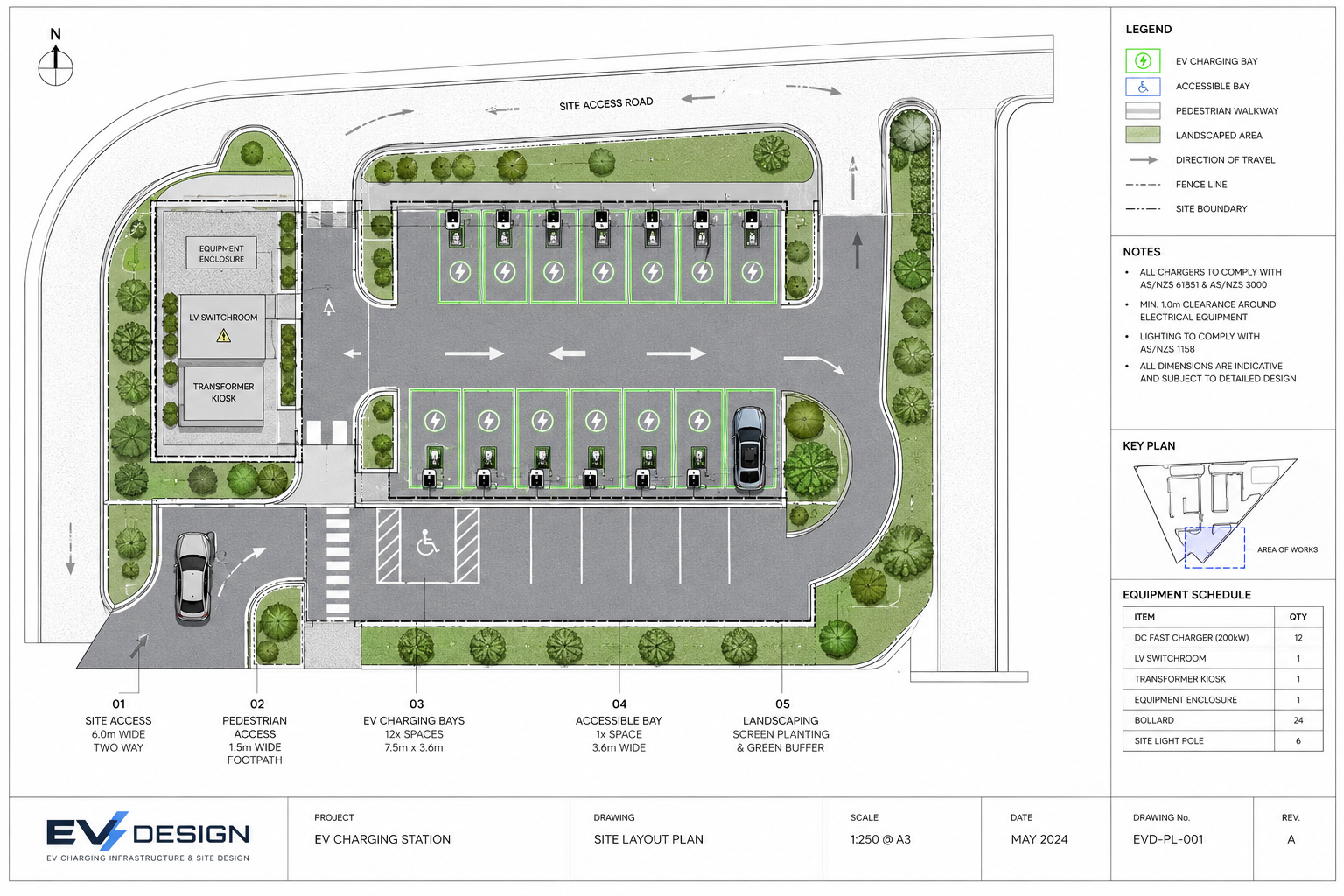
EV Design provides specialist consultancy and engineering support for EV charging projects of all sizes, from workplace and residential installations through to rapid-charging hubs, fleet depots and high-powered HGV charging facilities.
We combine electrical engineering, site planning and practical construction experience to develop coordinated designs that are safe, buildable and commercially effective.
Our involvement can begin at the earliest feasibility stage and continue through detailed design, tender, construction and commissioning.

Four specialist disciplines, one consultancy
EV car charging, electric HGV infrastructure, Megawatt Charging System design, and the rigorous electrical engineering that underpins all of it.
Technical rigour at every stage of your project
EV Design combines deep electrical engineering expertise with hands-on EV infrastructure experience — backed by the proven track record of JBSE Consulting Engineers. We don't just advise; we deliver complete, construction-ready design packages.
About EV DesignRigorous Technical Standards
Our designs are grounded in IEC, BS, and DNO standards — full compliance from initial feasibility through to construction delivery.
End-to-End Design Expertise
From AC workplace chargers to HGV Megawatt Charging Systems — we cover the full spectrum of EV infrastructure in a single consultancy relationship.
UK-Wide Delivery
Serving commercial, residential, fleet, industrial and public-sector clients from our base in Lancashire — no project is too far afield.
JBSE Engineering Pedigree
Backed by JBSE Consulting Engineers — an established multi-discipline practice whose track record underpins every EV Design project.
IEC 60287 cable thermal analysis — a capability most consultancies don't offer
Standard BS 7671 current-carrying capacity tables assume typical installation conditions. High-power DC EV charging is not typical — dense cable routes, variable soil thermal resistivity, and near-continuous loading mean the tables can understate the thermal risk significantly.
First-principles thermal modelling
We calculate the actual maximum current for your specific installation — burial depth, soil resistivity, grouping, duct arrangement, and load profile — not a generic table value.
Applied to every DC cable system
IEC 60287 analysis is standard practice on all our DC and high-power AC cable designs, not an optional extra. It is how confident cable sizing is done.
Prevents costly failures
Cables running above design temperature degrade, fail early, and in the worst case present a fire risk. Correct sizing from the outset eliminates this risk.
Every discipline. One specialist.
The kinds of projects we design
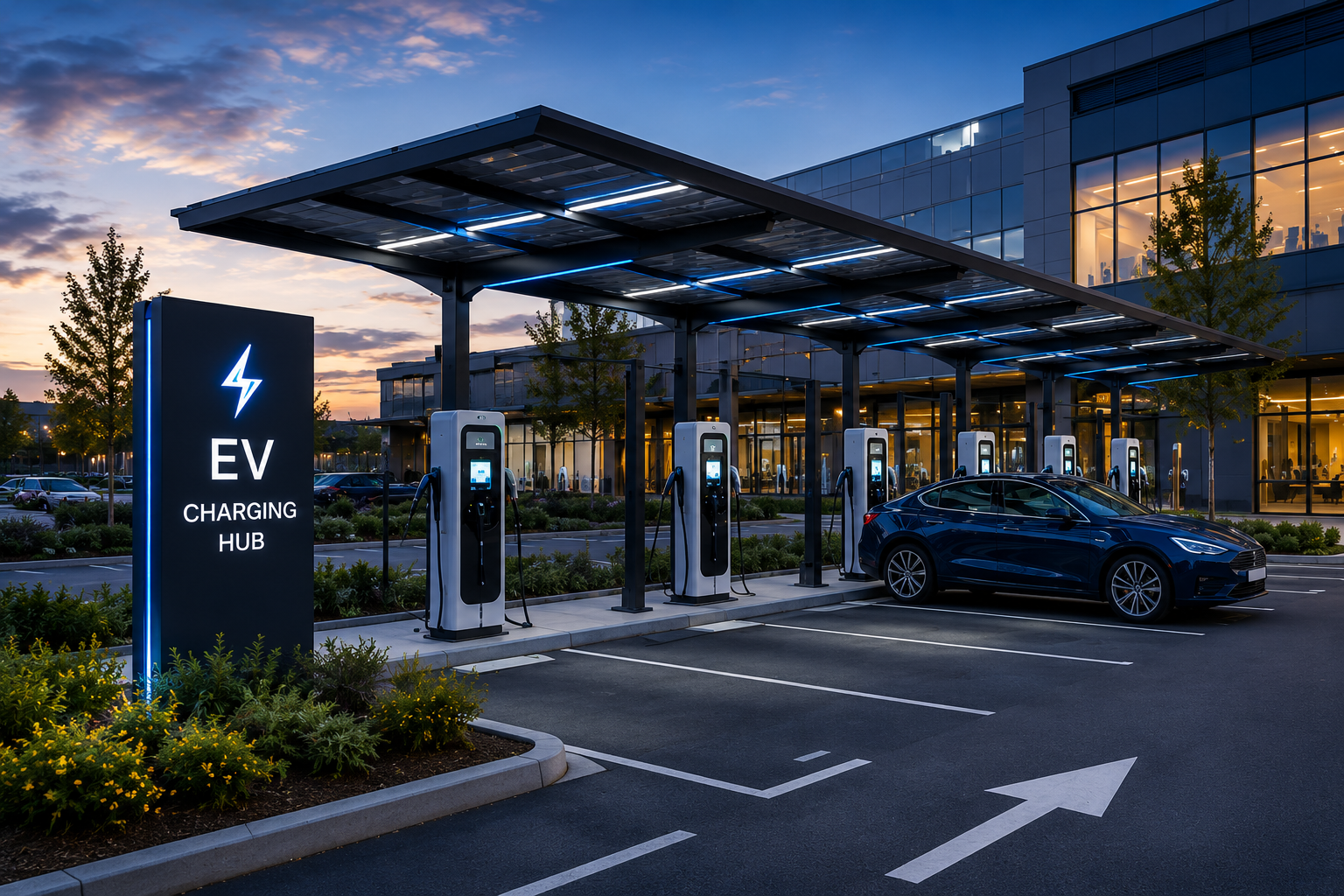 Illustrative
Commercial Charging Hub
Multi-bay rapid charging for retail and destination sites.
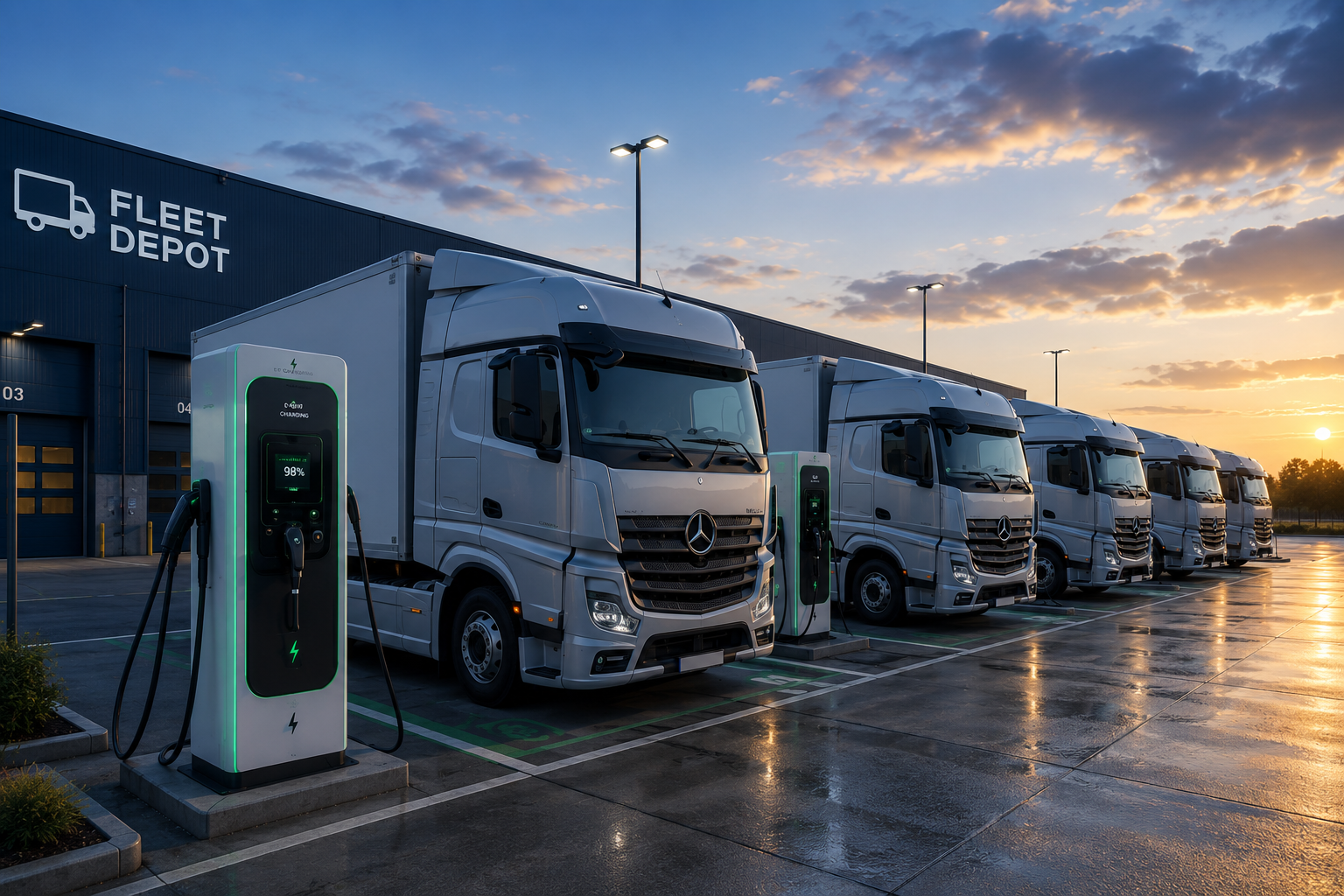 Illustrative
HGV Fleet Charging
High-power depot charging for electric HGV fleets.
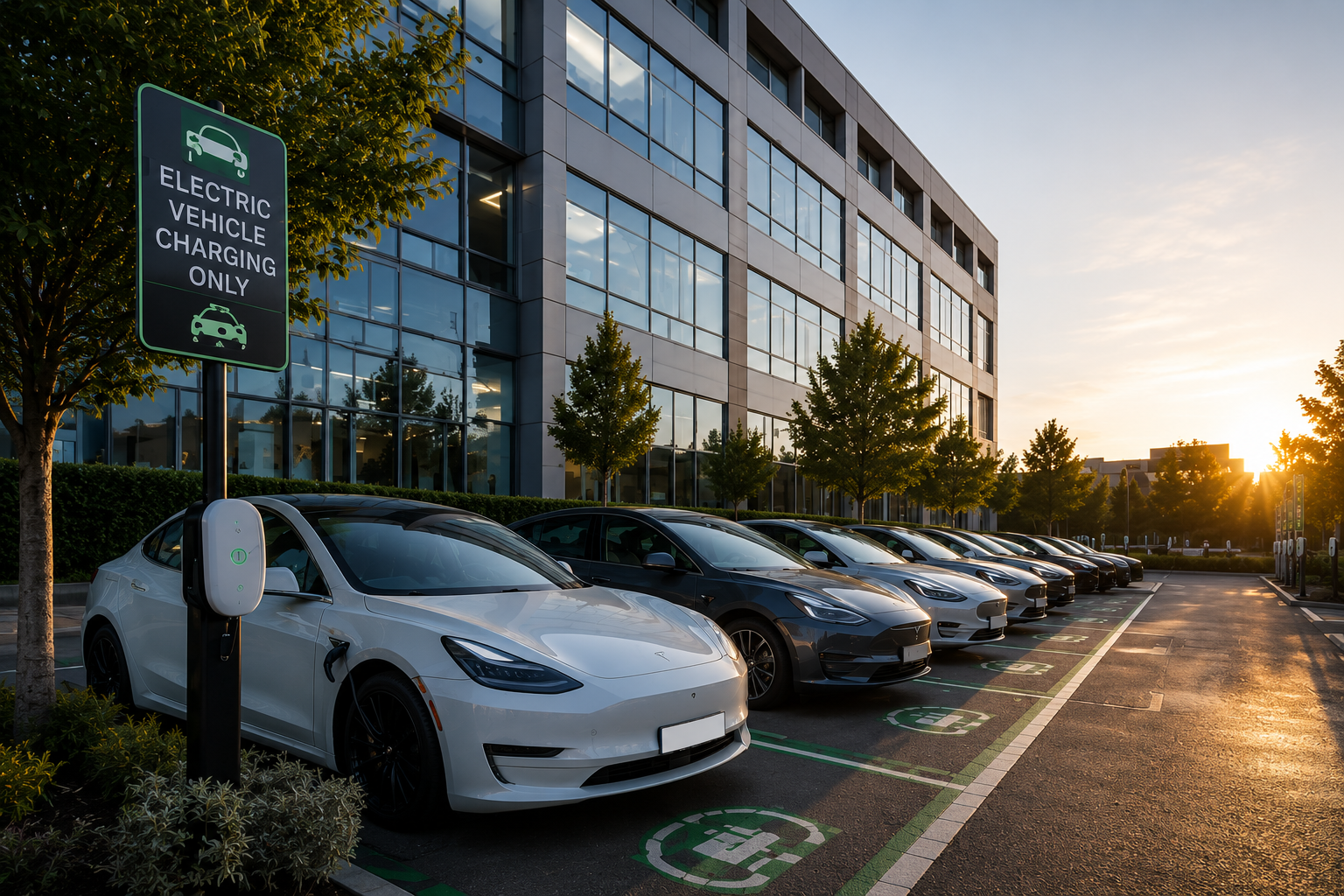 Illustrative
Workplace Charging Scheme
AC charging for workplace and employee car parks.
Ready to start your EV charging project?
Talk to our specialists about feasibility, design and technical delivery — UK-wide.