
EV Charging Infrastructure Design
Complete AC and DC EV charging design for cars and light vehicles — from initial feasibility through to construction-ready tender packages, across every sector.
The right charging technology, correctly designed
Selecting between AC and DC charging — and designing the electrical infrastructure to support it correctly — is the foundation of any successful EV charging project. The choice depends on how long vehicles dwell, the power available from the grid connection, future-proofing requirements, and the capital and operating cost envelope the client is working within.
AC charging (typically 7 kW to 22 kW) suits destinations where vehicles park for an hour or more: workplaces, residential developments, retail parks, and overnight fleet depots. DC rapid and ultra-rapid charging (50 kW to 350 kW) suits locations requiring meaningful charge in twenty minutes or less: motorway services, roadside hubs, and fleet operations with high vehicle turnover.
EV Design provides comprehensive electrical design for both technologies — covering the complete scope from feasibility and site layout through to protection studies, cable thermal calculations, DNO coordination, and construction-ready drawings.
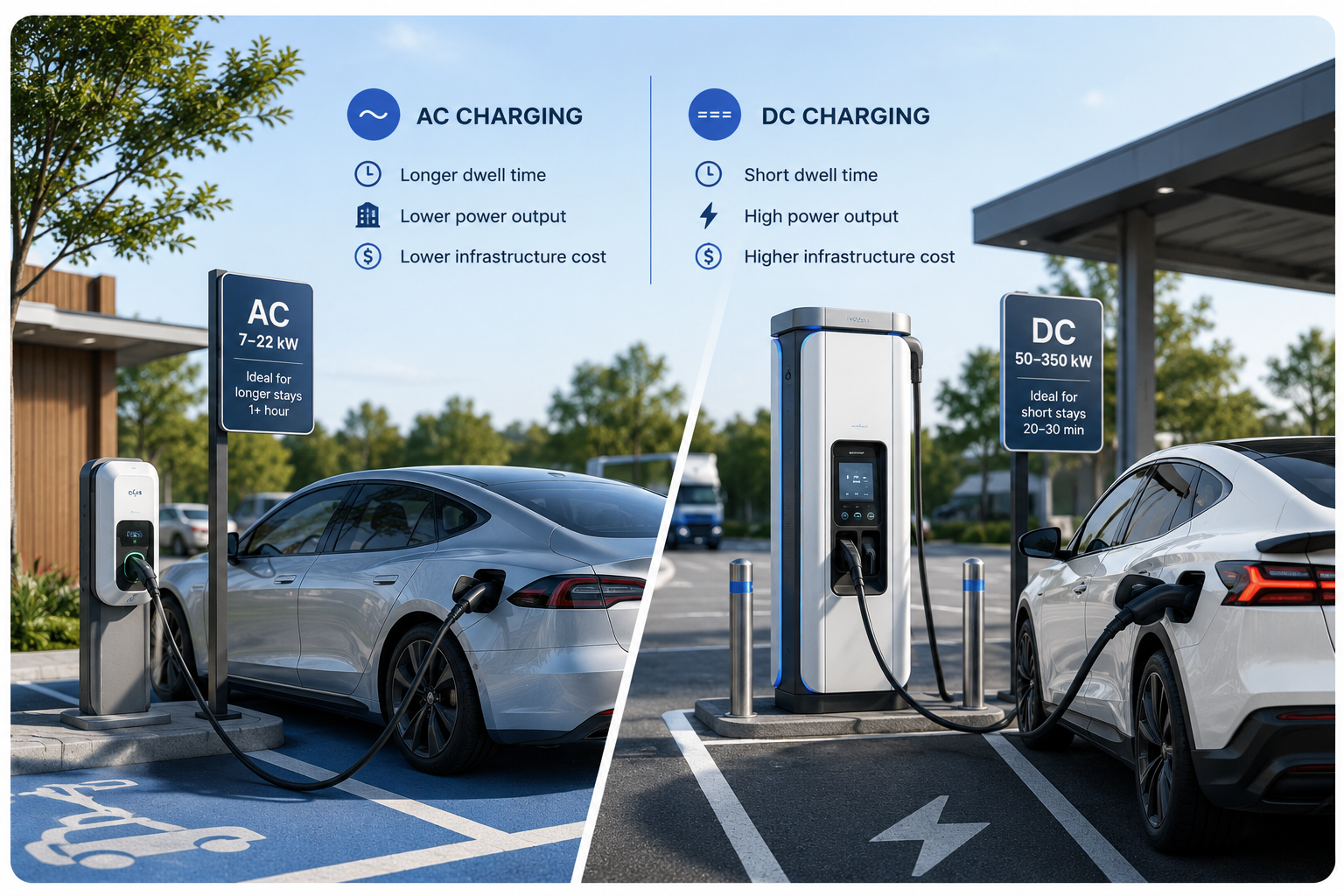
AC charging design and DC rapid charging design
Up to 22 kW per point
AC charging design for workplace, residential, retail and public-sector installations. Covers single-phase (3.6–7.4 kW) and three-phase (11–22 kW) systems, including load management strategies for multi-point installations.
- Feasibility report and site assessment
- EV charging site layout drawings
- Charger selection and specification
- AC cable sizing and routing calculations
- Ducting and containment design
- Earthing and O-PEN protection scheme
- Electrical load and capacity assessment
- DNO application support documentation
- Tender drawings and specification
- Construction-stage design support
50 kW to 350 kW per unit
DC rapid and ultra-rapid charging design for public charging hubs, fleet depots, motorway services and retail destinations. The higher power levels demand rigorous cable thermal modelling, protection coordination, and careful DNO engagement.
- DC rapid / ultra-rapid feasibility study
- Site layout and charger positioning drawings
- IEC 60287 cable thermal analysis report
- DC cable sizing and routing calculations
- Protection, fault-level and discrimination study
- Earthing and O-PEN protection design
- Equipment compound and feeder pillar layouts
- DNO connection application support
- Tender drawings, specifications and schedules
- Construction-stage technical support
EV charging across every sector
Commercial & Retail
- Office and business park car parks
- Retail destinations and shopping centres
- Hotels and leisure facilities
- Multi-storey car parks
Residential
- Multi-unit residential (MURBs)
- Housing developments
- Social housing schemes
- Apartment blocks
Fleet & Operational
- Company car and light van fleets
- Overnight depot charging
- Mixed-use fleet facilities
- Pool vehicle charging
Public Sector
- Local authority car parks
- NHS and healthcare estates
- Education campuses
- Government and civic buildings
Ready to start your EV charging project?
Talk to our specialists about feasibility, design and technical delivery — UK-wide.