Megawatt Charging System Design
MCS is an emerging technology for electric HGVs and heavy fleet vehicles. EV Design is actively developing capability in this area — positioned at the forefront of this new infrastructure discipline ahead of commercial deployment.
Developing MCS expertise ahead of the market
The Megawatt Charging System is the next frontier in electric vehicle infrastructure — a standardised high-power charging technology designed to make long-distance electric trucking a practical reality. MCS enables charging at up to 3.75 MW per vehicle, sufficient to add a couple of hundred miles of range to a fully electric heavy truck in under an hour.
MCS is still in the early stages of commercial deployment. The infrastructure standard is maturing, the first MCS-capable chargers are entering the market, and the UK planning and grid connection pipeline for MCS-capable sites is only beginning to develop. The organisations that move early — understanding the technical requirements and beginning the grid and planning process now — will have a significant advantage when the first wave of MCS-capable trucks arrives.
EV Design is an emerging capability we are actively developing in this area. We are engaging with the evolving MCS standards, building the engineering knowledge base required to design compliant MCS infrastructure, and positioning ourselves to support clients through the earliest stages of MCS project development. We do not yet have a track record of completed MCS installations — but we are investing in the technical capability to be ready when clients need it.
Our position on MCS: We are developing this capability now, ahead of the market — not claiming experience we do not yet have. If you are planning an MCS installation and want to work with a consultancy that is building genuine technical depth in this area, we would welcome the conversation.
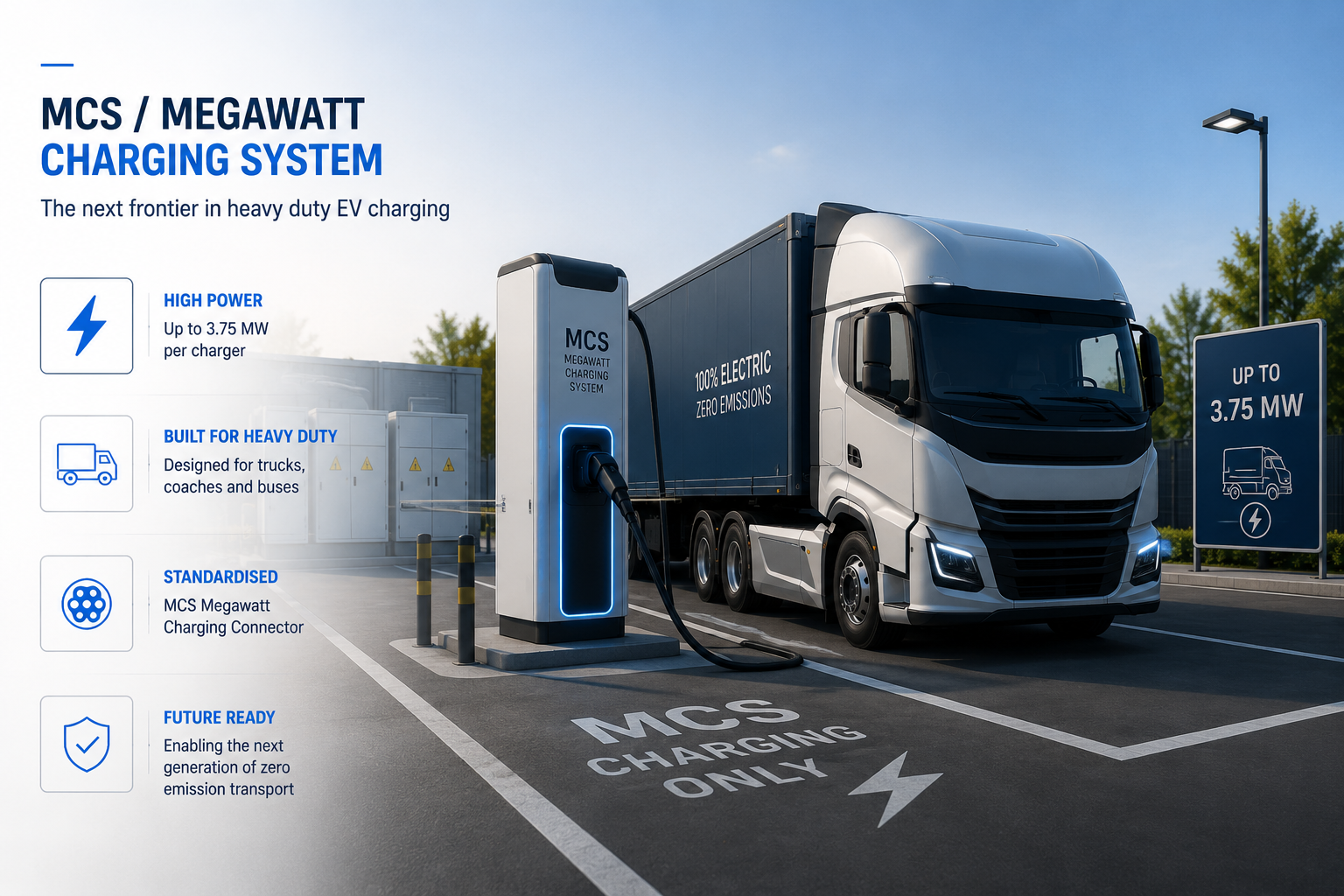
Up to 3.75 MW per charger
Heavy trucks, coaches, buses
MCS Megawatt Charging Connector
1,250 V DC
3,000 A
ISO 15118-20 / MCS
The technical challenges of MCS infrastructure design
Grid Connection at Megawatt Scale
Deploying MCS chargers in meaningful numbers requires grid connections of a scale that is unusual even for large industrial sites. A single MCS charger at full output can draw as much power as hundreds of homes. Sizing and securing the grid connection — and managing the relationship with the Distribution Network Operator from the earliest stage — is a critical part of any MCS infrastructure project.
Electrical Infrastructure Design
The LV and HV electrical infrastructure serving an MCS installation must be designed to handle very high fault levels, sustained full-load currents, and the switching transients associated with high-power DC converters. Cable thermal analysis to IEC 60287, protection coordination studies, and earthing system design all require particular care at these power levels.
Site Layout and Cable Management
MCS chargers are physically large, and the vehicles using them are the largest on the road. The site layout — including the positioning of charging equipment, vehicle circulation, waiting areas, and the routing of high-current cables — must be resolved in close coordination with the civil and site design team from the outset.
Standards Landscape in Development
The MCS standard itself is still maturing. The ISO 15118-20 communication protocol, the MCS connector specification, and the wider ecosystem of charger hardware, vehicle-side systems and network management are all evolving. Designing infrastructure for MCS today requires an understanding of the current standards position and the likely direction of development.
The grid connection and planning lead time is long — starting early matters
Securing the grid capacity for a multi-megawatt MCS installation is not a quick process. Distribution Network Operators are working through significant backlogs of connection applications, and reinforcement works can take years to complete. Sites that begin the connection process and technical feasibility work now are likely to be significantly ahead of competitors who wait for the market to mature before engaging.
EV Design can support clients through the earliest stages of MCS project development — capacity assessments, grid connection scoping, and the technical due diligence required to make an informed investment decision.
Discuss your MCS projectReady to start your EV charging project?
Talk to our specialists about feasibility, design and technical delivery — UK-wide.